Guide
Repair or replace your siding?
Most siding problems start small. Here is how contractors weigh a repair against new siding, and what to look at before you call.
Repair or replace?
Which way do the signs point?
A contractor confirms it on site. This table shows how the usual signs tend to read.
| What you see | Repair is often enough | Replacement is worth pricing |
|---|---|---|
| Cracks and holes | A few panels, in one or two spots | Brittle vinyl cracking all over the house |
| Loose or missing pieces | Storm-unlocked panels with intact nail hems | Panels that keep coming off on several walls |
| Soft or swollen boards | Rot under one window or gutter end | Rot along whole bottom courses or several walls |
| Fading and chalking | One weathered wall you can live with | Every wall faded and you want a new color |
| Warping and rippling | Panels nailed too tight, refastened | Wavy walls from an uneven wall behind |
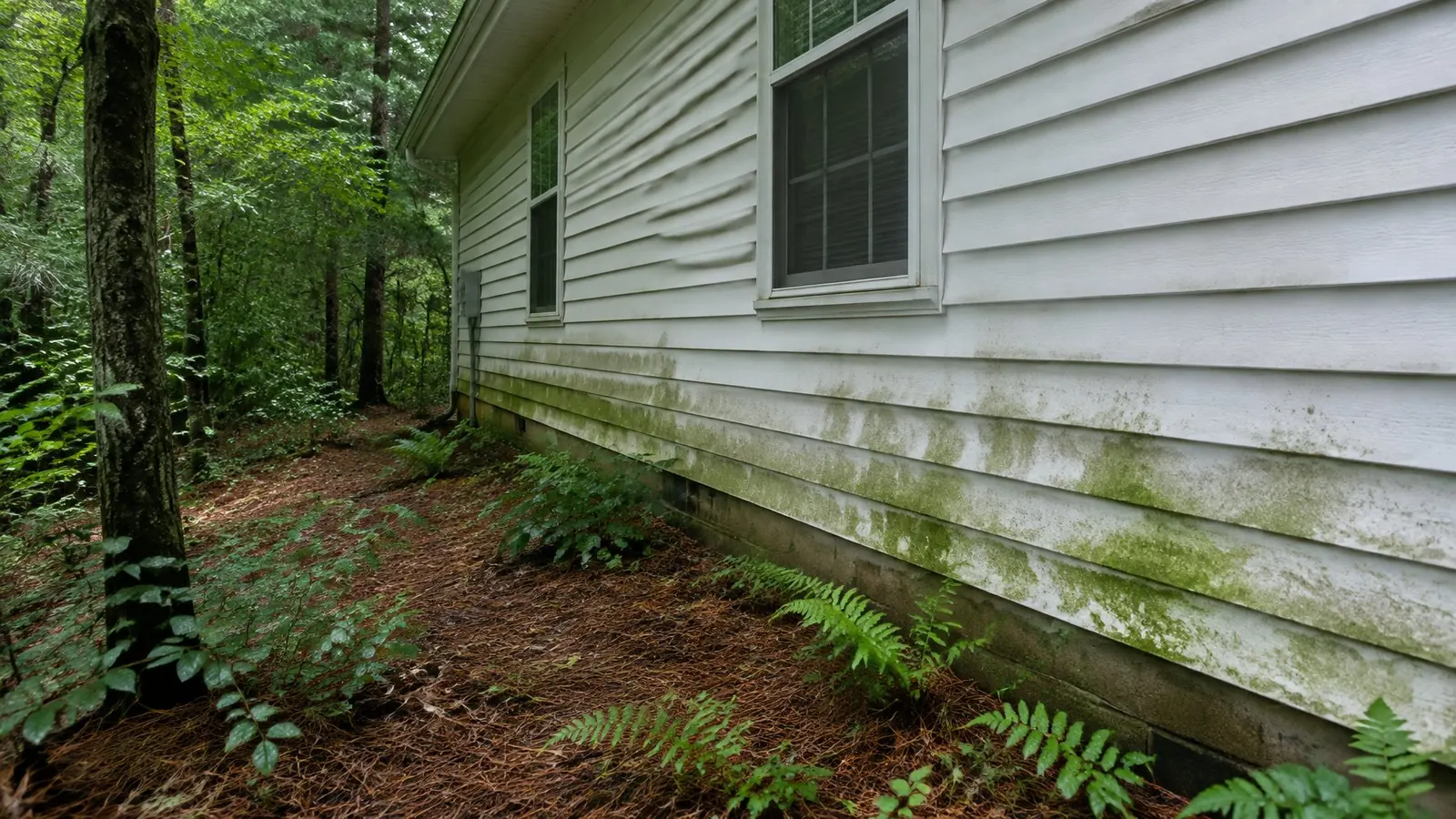
| Mildew and stains | Cleaning, then fixing drainage and shade | Staining that keeps coming back over damp, failing siding |
| Age and matching | Spare pieces or a matching line still sold | No match exists and patches would stand out |
Either way, a contractor reached through this line takes repair calls as well as replacements.
What a contractor weighs
Three questions decide it: how much of the siding is failing, whether the wall behind it is sound, and whether a repair will match and last long enough to be worth paying for.
A few cracked or storm-loosened panels on otherwise sound siding are a repair. Brittle vinyl that cracks wherever it is touched, or wood rotting along every bottom course, usually is not. When it is close, a careful contractor prices both.
Water is the deciding factor more often than looks. Soft spots, swelling, paint peeling in sheets and stains inside the house mean the wall needs opening up, whatever happens to the siding.
Check from the ground
A ten-minute walk around the house
- Look along each wall for waves, gaps, missing or cracked pieces
- Press gently on boards under windows and near downspouts for softness
- Check the bottom course and the strip above every roof line
- Look for peeling paint, swelling or stains on wood and engineered boards
- Note mildew on shaded walls and where water splashes from gutters
- Inside, look for stains or musty smells on outside walls
Questions
Repair or replace: common questions
Is it worth repairing old vinyl siding?
If only a few panels are damaged and the rest is still flexible, often yes. If the vinyl cracks easily everywhere, repairs tend to multiply.
Can I replace siding on just one wall?
Yes, but a match is hard if the old siding has faded. Some owners re-side the most visible wall and use its old panels for repairs elsewhere.
What does rot behind the siding mean for the price?
It adds to the job, usually priced per sheet of sheathing or per foot of framing. Ask for the rate in writing before work starts.
Siding cracked, loose or worn out?
Talk with a siding contractor who works in Greer
One call connects you with an independent siding contractor serving Greer, Taylors, Duncan, Lyman and Travelers Rest. Have the walls looked at, then ask for a written price for the repair or the new siding.
Cracked panels, soft boards or siding that has had its day? Talk it through with a local contractor.
Your call goes to an independent siding contractor serving the Greer area that takes on repairs as well as full replacements.
Call (864) 734-9197Calls may be recorded. See the referral disclosure and the privacy policy.